
For the past decade or so, I have appreciated the Council on Foreign Relations (CFR)‘s offerings through the Religion and Foreing Policy (RFP) program. During my doctoral work, I was a fellow with the Institute for Culture, Religion, and World Affairs, and my scholarship spans global societies and cultures, so the interest is rather natural for me. Webinars sponsored by the RFP program were particularly interesting during the Covid-19 pandemic as I was researching religion and race in the context of the pandemic at the time. In Feburary, I attended the CFR Religion and Foreign Policy Workshop, an annual gathering that brings together “congregational and lay leaders, scholars of religion, and representatives of faith-based organizations from across the country for conversations on pressing global concerns with policymakers, CFR fellows, and other experts.” One of the panels got a bit spicy during the Q&A!
At the end of the workshop, we were asked to participate in a set of conversations that seemed geared toward helping CFR think strategically about the future of the Religion and Foreign Policy program. The questions we were asked include:
- How can CFR’s Religion and Foreign Policy program tailor its resources to better serve religious and civil society leaders?
- What formats or platforms would be most effective for CFR to engage faith-based communities ( e.g., briefings, reports, workshops, digital content)? Which existing CFR resources do you find most useful? How can CFR resources be improved?
- How should CFR’s Religion and Foreign Policy program be measuring impact? How can the program scale up and broaden its reach to connect religious constituencies with its analysis and network?
- Which international or regional issues ( e.g., conflict, displacement, climate change, governance, human rights) are most pressing for your communities? Which issues do they care most deeply about?
- What challenges do you face in working with international organizations, think tanks, or governments on policy-related issues? What gaps exist in connecting religious communities and policymakers?
While I am always happy to participate in conversations about the future of organizations I care about, the question I came away with for myself was why do religious leaders and religion scholars care about American foreign policy in the first place? It seems to me that answering this question is a prerequisite to answering the questions we were asked at the workshop, so this post is my stab at answering it.
Religious Leaders
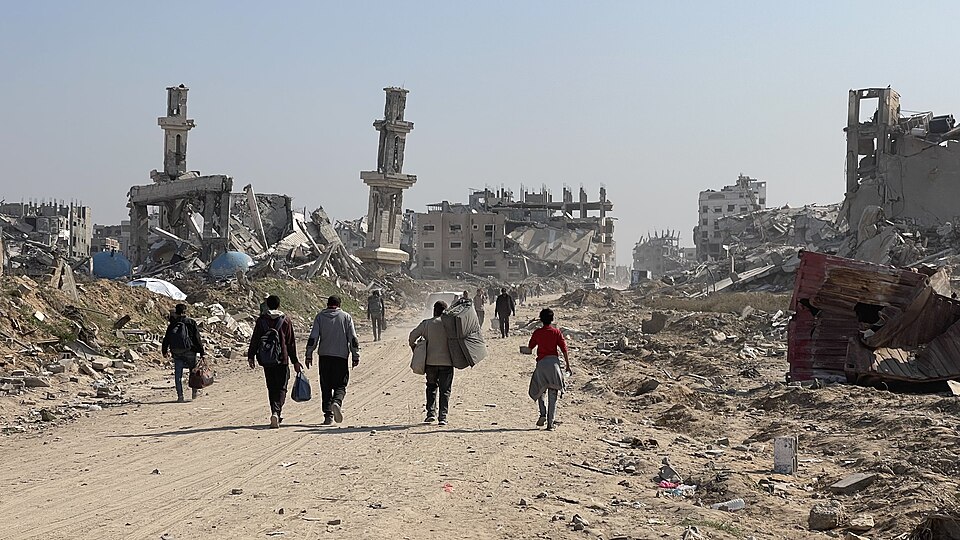
On one hand, it makes intuitive sense that religious leaders should care about foreign policy. Most religous traditions are, at this stage, transnational movements, and so their adherents are implicated in the policies that regulate the flows of resources to and from, and the very movements of, their coreligionists by virtue of their shared identity. That is, foreign policy has real impacts on people religious adherents are connected to, so said adherents should care about it, and religious leaders should call attention to it and help their communities navigate their individual and collective responses to it. Examples of this abound, but perhaps none as clearly as the public wrestling among the American Jewish community with the American foreign policy response to the October 7, 2023 Hamas attack on Israel and the Israeli response.
On the other hand, religion is messy and complicated in ways that conflict with that intuitive logic.
One piece of that messiness is sociological. While religious adherents do inhabit a transnational shared identity with their coreligionists, that sharing is generally rather weak because religious communities are, first and foremost, local. If there are no apparent implications of foreign policy on the concerns of the local community, it can be hard to make the case for religious communities to care very much. There are increasing numbers of ways in which foreign policy is impacting local concerns in religious communities today. Directly, religous communiities are often involved in food ministries for migrant communities, the need for which is going up as policy restrictions cut off the ability of migrants to work, and which become targets of immigration enforcement actions because by their nature they concentrate migrants in one place. Indirectly, immigration sweeps are impacting the availability of relatively inexpensive migrant workers, the lack of which impact the viability of businesses whose owners and leaders are members of religious communities. This level of local impact is unusual, though, as foreign policy is usually focused at the periphery of the state, and so religious communities are unlikely to feel its impacts.
Another piece of the messiness of religion is theological, namely that religion has primarily to do with matters of transcendence, and so has an internal drive away from such immanent concerns as policy and politics. Religious communities are focused primarily on the spiritual wellbeing of their members and the spiritual vitality of the community. And most religious adherents would prefer their communities maintain that focus and stay away from political issues, including foreign policy. Even though most religious traditions have developed some version of a “social gospel” theology, in which social concerns are reinterpreted as theological concerns, there is not a strong call among adherents for religious leaders to lean into those strains, and those who choose to do so anyway risk alienating their communities. Again, this allergy can be overcome when policies have locally felt impacts. Sometimes religious leaders seek to override the allergy by tying policy to theology, such as the way some evangelical Christians have come to exhibit strong support for Israel on the basis of the need for an Israeli state in their eschatology. But it is important to remember that the allergy is the baseline and such situations are exceptions to the rule.
A third complication is the way that religion functions as an identity, namely that there is no such thing as religion. That is, religion is not itself an identity marker; people do not generally identify as religious, they identify as Buddhist, Hindu, Jewish, Muslim, Confucian, Baha’i, etc. The upshot for foreign policy is that matters of foreign policy do not impact religious communities or religious leaders generally, they impact specific religious communities and their leaders in specific ways. Probably obviously, the American foreign policy response in the wake of the October 7, 2023 Hamas attack on Israel has impacted Jewish, Muslim, and Christian communities in very different ways, and impacted other religious communities little if at all. Moreover, members of one religious community are unlikely to care overly much about the impacts of foreign policy on another religious community because they do not see themselves belonging to a common category with that other community.
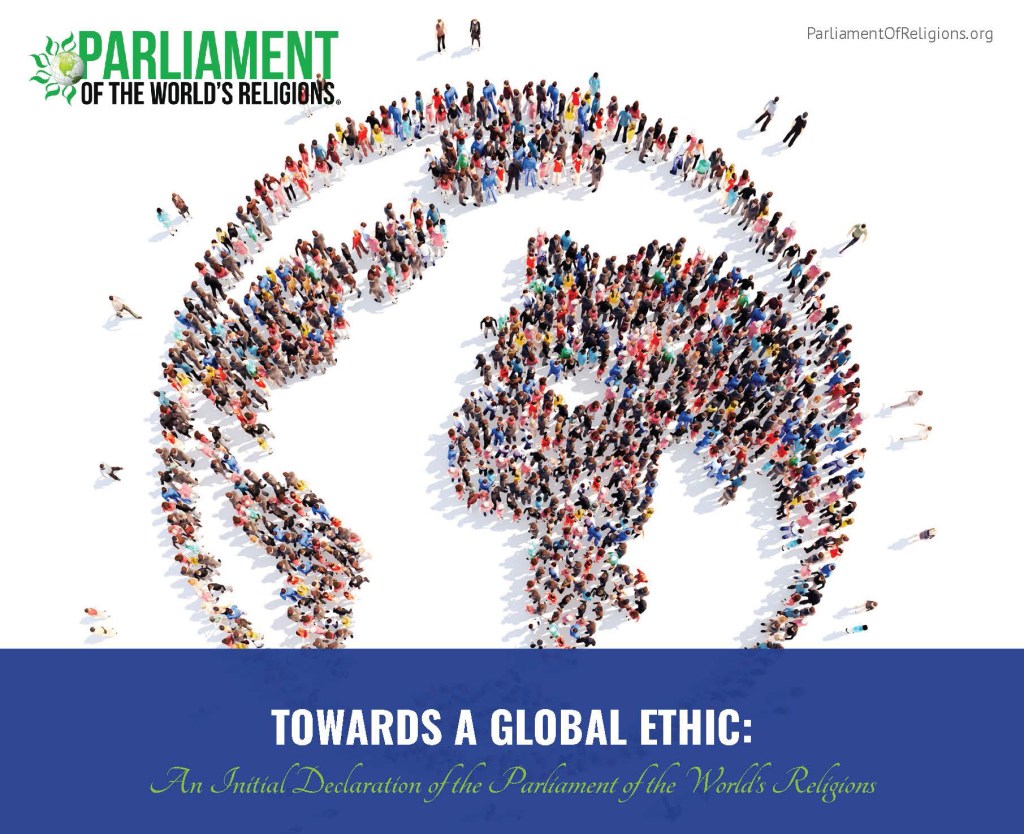
There is a final dimension of the messiness of religion that in fact drives communities and leaders toward engagement with foreign policy: ethics. in part deriving from their emphasis on transcendence, religions have generally tended toward developing ethical paradigms that are generalizable, and indeed universalizable, beyond themselves. The result is the belief that the ethical norms and paradigms of the religious community should be adopted globally because doing so will result in the greatest good. The messiness arises from the fact that while a number of the norms religious traditions advocate universality for are more or less in common, (e.g. do not murder), many are not, and the paradigms in which they reside are not necessarily commensurable. Religious traditions have also developed feedback mechanisms to get around these strictures when they need to, but diverge on when doing so is permissibile and how to decide. Nevertheless, religious communities generally do believe that their local, regional, and national leaders should be developing policies, including foreign policy, in line with their universal ethical systems on the basis that they are, in fact, universal. When policies do not so conform, then, there is a certain degree of motivation to advocate that the policies be changed.
Religion Scholars
Like “religious leaders,” the category of “religion scholars” is a bit of a misnomer because virtually no one identifies as a religion scholar generally. In this case, however, the issue is not the distinctness of religious identity but rather the distinctness of discipline, methodology, and focus. A sociologist of religion who uses demographic methods to understand religion in America is going to have very different areas and degrees of interest in American foreign policy than a theologian who uses deep reading and textual analysis to parse doctrinal matters in order to guide a particular denomination of Protestant Christianity. Careful consideration of the scholarly landscape is thus necessary and instructive for understanding these variations of interest.
Perhaps the most basic distinction among religion scholars is between approaches that might broadly be classified as theology and those that might be classified as religious studies. Scholars in the theology camp make normative claims whereas scholars in the religious studies camp make descriptive claims. Normative claims are rationalizations of what religious people should take to be good, true, and beautiful about divinity, the world, themselves, etc., and how they should behave as a result. Descriptive claims are statements of what religious people actually do take to be good, true, and beautiful, and of their behavior, whether that behavior is consistent with their beliefs as described or not. The normative scholars tend to be in seminaries, schools of theology, or divinity schools, whereas the descriptive scholars tend to be in religious studies departments or in departments defined by their particular disciplinary approach, e.g. sociology, anthropology, history, etc. Sometimes this distinction gets blurred, however, such as in the field of practical theology, which seeks to understand what is happening in religious communities descriptively in order to then evaluate what is happening against theological norms. And where might we find philosophy of religion? Increasingly nowhere.
Both sides of the fence admit of further divergences, some of which may be more interested in foreign affairs than others. On the theology side, there are plenty of theologians, scriptural scholars, and historians who are perfectly comfortable remaining cloistered in the arcana of their niches. There are also ethicists who may be interested in foreign affairs due to the aforementioned predilecton toward universality in religious ethics. There are missiologists who study the processes of spreading faith that must ride the shifting contours of diplomatic whims. And there are comparative theologians with expertise in inculturated frameworks and habits of mind that underly tensions that arise when said cultures interact. There are scholars in religious studies who likewise focus on history or texts or societies and cultures that are not impacted by foreign policy, at least at a given moment. But the descriptions of religion and the cultures built upon it developed by religious studies scholars can be immensely useful to foreign policy experts, and there are some who focus on religion and international relations or even build computational models of international migration.
Circling Back to CFR
I want to be clear that it is a really good thing that CFR has a religion and foreign policy program. As CFR notes in their centennary report, the program was started in 2006, a time when meaningful connections between the religion and foreign policies sectors was rare in spite of how increasingly obvious the necessity of such connections had become. The neglect of religion by the American foreign policy establishment had been recognized in the previous decade, as epitomized in the volume Religion, The Missing Dimension of Statecraft. Meanwhile, the terrorist attacks of September 11, 2001 had made the connection excruciatingly explicit. At that point, bringing religious leaders and scholars together with foreign policy experts at all, almost regardless of what was accomplished, was a cutting edge move.
Unsurprisingly, things look a little different twenty years on, so it is good that CFR is taking time to take stock and consider how the program might most fruiitfully move forward. For one thing, religion has been formally and legally prioritized in U.S. foreign policy since the passage of the International Religious Freedom Act in 1998, which was embodied in a prominent office in the Obama State Department as of 2009. Meanwhile, the role of religion in the U.S. itself has shifted dramatically, with the population of religiously unaffiliated people growing from 5% to 30% over the past thirty years, and the unaffiliated are the only category other than Muslims to have grown their share of the global population over the past ten years, albeit not nearly as much as here in the U.S. Finally, American foreign policy suffers from whiplash as successive administrations pursue radically divergent aims based on fundamentally incompatible assumptions. What is a religion and foreign policy program to do beyond providing a conduit for foreign policy professionals and experts to access much needed spiritual care?
One important pivot for the RFP program at CFR to make is to directly atune its programs and offerings to the nuances of the community it seeks to address. For example, at present, the program is oriented broadly to “members of the religion community,” but as noted above, no one identifies with “the religion community” generally but rather with specific religious traditions and disciplines for studying religion. Likewise, CFR identifies the interfaith character of the RFP program as a key dimension of its ethos. To be sure, interfaith engagement has many virtues, but with regard to foreign policy, there are often real differences among religious traditions, and within religious traditions, with respect to how they view the issues at stake. Asking representatives and scholars of those traditions to engage around those differences in the presence of members of other traditions runs the real risk of short changing the conversation to be had. CFR should be upfront about who is likely to be interested in a particular topic and should seriously consider hosting conversations that are specifically for and even limited to particular religious communities. Likewise, CFR should differentiate scholars from leaders, and religious scholars (theology) from scholars of religion (religious studies).
CFR should also work to demonstrate the local impact of the foreign policy issues it seeks to draw attention to. Members of religious communities and their leaders are just as inattentive to current affairs as the general public, which is to say they pay scant attention at all, and overcoming the inertia of that inattention requires connecting foreign affairs and policy to the local impacts they do feel and care about. Notably, this does not necessarily mean that the impacts are on the correligionists of a given community. Indeed, people are much more likely to pay attention to local impact on members of other religious traditions than they are to distant impact on their correligionists in many cases. Because foreign policy generally operates at the periphery of the state, drawing attention to its local impacts is paticularly crucial. Since one of the things CFR does is it “promotes informed public discussion,” it will want to attend to what its constituencies need in order to be motivated to participate in that discussion in the first place. CFR has a strong stable of religious leaders and scholars, but generally they are people who are already interested in matters of foreign policy. Extending the scope and impact of the program will require a strategic shift.


Leave a comment