
As I have been working the past few years to document the explosion of interest in psychedelics for improving health and for spiritual exploration, my sense has been that the enthusiasm surrounding psychedelics has largely been outstripping science, policy, and, frankly, common sense. On one hand, there is clear evidence that psychedelics are effective in treating some of the most intractable mental health problems plaguing society, as demonstrated repeatedly in well conceived and conducted scientific studies. On the other, the very intractability of the conditions for which psychedelics show promise generates a level of demand that threatens to overstate the rewards, race past the real risks, and neglect ethical and cultural considerations of psychedelic therapies. It is therefore quite refreshing to see a sober assessment of the state of the field regarding use of psilocybin for the treatment of major depressive disorder (MDD) from the US National Network of Depression Centers’ Task Group on Psychedelics and Related Compounds in the form of a thorough review and consensus statement in eClinicalMedicine (open access).

What It Says
The tl;dr version of the article is that psilocybin specifically, and perhaps other psychedelics as well, show real promise in treating a wide range of severe and difficult to treat mental health conditions, especially major depressive disorder, but there is still a lot more reasearch and a lot of other infrastructure that needs to be put in place before psychedelic therapy is ready for broad clinical implementation.
The authors do an admirable job of concisely summarizing the contours of the psychedelic medicine landscape and the state of the scientific literature investigating therapeutic use of psilocybin, so I am not going to try to further summarize those aspects of the article, especially since it is available open access. Instead, I will focus on the steps they identify that need to be taken before psilocybin is approved for clinical use and the rationale for each step.
The first set of steps have to do with how to further advance research:
- The authors call specifically for public funding of future research. At the moment, much of the research on psychedelics continues to be funded by private individuals, foundations, and corporations. Adding robust public funding is critical for improving broad public acceptance of the findings, and ultimately approval by regulatory agencies.
- They advocate multidisciplinary research into therapeutic mechanisms. Interdisciplinarity is critical because at the moment we do not really understand what it is about psychedelic therapy that makes it effective in treating a range of neurologic and psychiatric disorders. Is it the experiences they induce? Is it the therapy before, during, or after? Is it the plasticity they induce in the brain? Is it some combination of these, or something else entirely?
- They propose enhanced collaboration among research centers to enable data-harmonization. At the moment, researchers are designing their studies independently, including developing their own dosing regimens and therapy guidelines, and are choosing which instruments to employ to collect data. The result is that it can be hard to even compare results between studies at times, let alone undertake the secondary analyses the authors envision.
- Diversity: 80% of study participants have been white. This is not representative of the population who suffer from the disorders in question. Representation is important both for confirming safety and efficacy and for engendering trust in the findings.
The second set of steps have to do with how to translate research findings into appropriate protocols that can be implemented in clinical settings, and the economic, policy, and regulatory frameworks that need to be established.
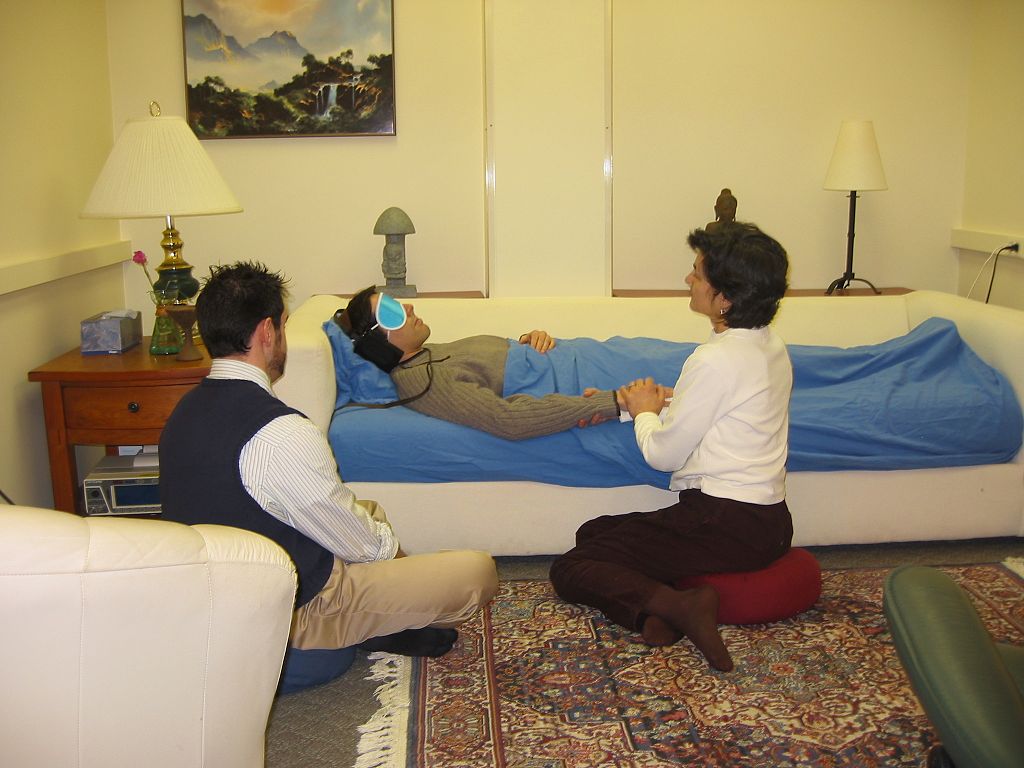
- The authors recognize that the range of psilocybin dosages and supportive therapy protocols employed in research studies need to be rendered consistent and optimized, and alternative protocols need to be investigated. Lab protocols are necessarily rigid, and do not allow exploration of effective dosing ranges or flexibility of therapeutic approach, let alone options such as group administration. The limited size and strict exclusionary criteria of the research environment also limits its ability to accurately identify rates of adverse incidents, drug interactions, and other critical safety measures in the broader population, and the limited time frame of these studies neglects potential long-term impacts.
- They advocate consultation with stakeholders, economic analysis, and logistical studies to work out the financial viability of psychedelic therapy and how to reduce, if possible, its high human, space, and other resources costs at present. The effects of psilocybin are usually most acute in the first couple of hours after ingestion but may persist as much as six to eight hours later, requiring long treatment visits with intensive, one-on-one support before, during, and after.
- Significantly more research is needed to establish the safety parameters for psilocybin treatments and identify predictors of response and adverse outcomes, especially the severely adverse outcomes that are rare in clinical trials because of their small size. This research should proceed alongside development of regulatory frameworks for monitoring adverse events in clinical settings.

Finally, the authors call for a standardized curriculum for training the full range of clinicians and providers involved in the provision of psilocybin treatments, alongside the launch of advanced fellowships, internships, and continuing medical education as the medium for delivering it, leading to certification.
What It Doesn’t
One of the things that makes the sobriety of this consensus statement so significant is that it comes about a year after the Food and Drug Administration decided not to approve MDMA for treatment of post-traumatic stress disorder (PTSD). The movement toward approval had been heavily hyped, and so the failure to achieve that goal, especially amidst accusations of research misconduct, was met with not only severe disappointment but also recriminations across the field. The NNDC statement about psilocybin stands in stark contrast to the hype model, calling as it does for thoroughgoing transparency about the perils, pitfalls, and limitations of psychedelic therapy, and a rather brutal degree of honesty about the actual state of play in psychedelic research. At the same time, the statement makes clear the real potential for psychedelic therapies as treatments for conditions that are, in some cases, highly resistant to any and all other interventions thus far. The absolute necessity of the honesty and transparency the statement represents is rendered crystal clear against the backdrop of the fiasco that was the MDMA decision, so it is somewhat disappointing that the authors not only neglect to draw the contrast explicitly but do not even mention the FDA decision and the situation surrounding it at all.
The statement does point to the importance of further investigating questions of how psychedelics work to achieve their remarkable effects. It may be quite surprising to some to learn that we can show pretty convincingly that psychedelics work, but our understanding of how and why they work is really quite limited. This is not terribly uncommon as drug treatments go, with safety and efficacy being the primary criteria for approval, both of which can be established without a complete mechanistic understanding. What is left unacknowledged in this consesus statement, then, in its call for further research on therapeutic mechanisms, is that the need for such understanding arises particularly in the case of psychedelics because the scope and complexity of causal factors are unique in their case. Patients being treated with psychedelics take a drug with the goal of improving their condition, just like other medical treatments. But they also receive psychotherapy before, during, and after they take the medication in a controlled environment. The medication induces often intense altered mental states, which patients who experience them often take to be meaningful and significant, and during which patients exhibit heightened suggestability. So what is doing the work here? Is it something about the neurochemistry the drug induces? Is it the increase in mental flexibility? Is it the therapy? Is it the altered experience? Is it meaning making around the altered experience? And what are we to make of the facts that not everyone evaluates this experience positively, which seems to correlate with the treatment not working, and that in about a third of cases, the treatment has no effect on the underlying condition at all? This is a much more complex causal topology than taking Tylenol for a headache. Without deeper understanding of its contours amidst a range of confounders, it is not even clear what the treatment actually is for which approval might be sought.
Finally, like much of the more recent research into medical uses of psychedelics, the consensus statement moves away from any kind of recognition of a role for religion or spirituality. It does recognize that people are using psychedelics for spiritual exploration and that there is a historical record, although less extensive than often described, of psilocybin use in indigenous American rituals. That said, the statement exhibits something of an allergy to the idea of religion or spirituality in a clinical context in spite of the fact that the need of religious and spiritual competencies among clinicians is recognized in the field. To be sure, it is important for researchers to move beyond the notion that psychedelic experiences are necessarily religious, and imposition of religious interpretations of psychedelic experiences by clinicians is entirely inappropriate, especially given the vulnerability of people under the influence of psychedelics. Many patients receiving psychedelic treatments, however, especially once use moves beyond university laboratories, are likely to interpret their experiences in religious and/or spiritual terms, and failing to even acknowledge this runs the risk of their care being inadequate. It is even possible, and as yet untested, that psychedelic therapies may be more effective among patients who adopt certain religious or spiritual frameworks than others, if nothing else as part of the effects of set and setting. Failing to acknowledge such possibilities does not make psychedelic research more empirical; it makes it biased. Moreover, the one type of clinician whose training already includes religious and spiritual competencies, including the avoidance of boundary violations, are never mentioned in the statement: chaplains and spiritual care professionals.
What It Means
For those suffering from conditions like major depressive disorder, especially when their conditions are treatment resistant, this consensus statement probably feels like a bucket of cold water being dumped over their hope. Likewise for those hoping to profit from the sales of psychedelics in the short term. But for those of us who really want our medical treatments to be safe and effective, this statement is best understood as a roadmap of how to get there sooner rather than later, with the promise of avoiding the pitfalls and backlash that have accompanied previous explorations of psychedelics for medical purposes. It is a critical intervention at a true pivot point for the field, and its careful balance of hope and sobriety will serve us well should we heed it.


Leave a comment